Public Interest, Public Figures, First Amendment, and some celebrity gossip - because, why not?
Sunday, October 20, 2024
Behind the Mask: Leonard Cohen's Game of Secrets
Welcome to River Deep Blog, where today we’re diving into the tangled web of intrigue surrounding Leonard Cohen. It's a story of deception, manipulation, and a fake informant that kicked off a public smear campaign against Kelley Lynch in the fall of 2004. By the spring of 2005, Cohen had crafted a perfectly curated narrative to spin to the media during private meetings with journalists—one that would soon make headlines. This story wasn’t just about so-called missing money but also Cohen’s massive tax issues and a lawsuit Neal Greenberg filed against Cohen and his lawyer Robert Kory, complete with accusations of extortion, conspiracy, and witness tampering. And smack in the middle of it all was Lynch.
Let’s set the scene: an iconic artist, millions of dollars gone missing, hints of tantric sex (yes, really), and a lawsuit dripping with scandalous details—all against a backdrop of a broken relationship with a long-time associate. Sounds like a Hollywood blockbuster, right? But this wasn’t fiction; this was Leonard Cohen’s real-life soap opera, with Neal Greenberg, a self-proclaimed Tibetan Buddhist, suing the soulful poet-turned-Zen Buddhist Cohen. The battle that ensued wasn’t pretty. Neal Greenberg accused Cohen of conspiracy and extortion, while Cohen retaliated, accusing his former financial and investment adviser of gross mismanagement. It was a legal drama that aired Cohen's dirty laundry, exposing some of the inner workings of his finances—a tale of betrayal that was anything but poetic.
The Players in This Drama:
So, who were the key players in this twisted tale? Leonard Cohen, the legendary singer-songwriter with a reputation for soul-searching lyrics and deep spirituality, suddenly found himself caught in a web of his own deceit, as revealed by his personal manager, Kelley Lynch.
Kelley Lynch, Cohen’s savvy Los Angeles-based personal manager, had been with him through thick and thin, skillfully handling the complexities of Cohen's business while maintaining a close personal friendship with Cohen and his family. Kelley was also a Tibetan Buddhist with an unconventional outlook on life. She had a child with Steve Lindsey, a renowned record producer. And it was Lindsey who introduced Kelley to Betsy Superfon—a name that would become central to this messy saga.
Now, Betsy Superfon was no stranger to high-stakes drama. A gambling, pill-popping con artist with a flair for the dramatic, Betsy had met Steve Lindsey during a game of Texas Hold 'Em at a club one night. She wasted no time sinking her teeth into Lindsey’s circle, with an eye toward meeting celebrity acquaintances and friends—people like Cloris Leachman, Dr. Dre, and Eminem. Betsy was one of those people who surrounded herself with shady characters—gamblers, addicts, con men—you name it. She was always looking for a way to leverage her connections. Superfon also understood that Kelley had her own celebrity friends, such as Oliver Stone and Steven Seagal, and was close friends with enlightened Tibetan Lamas like His Holiness Kusum Lingpa and His Holiness the 14th Sharmapa, who helped guide her through what would become an inconceivable ordeal.
One such shady associate of Betsy’s was Dannon Smith, a self-proclaimed arms and drug dealer who drove a bulletproof Hummer. Dannon thrived in murky situations, the kind where deception was part of everyday life. Betsy introduced Dannon to Julie Eisenberg, daughter of Joel Eisenberg, who had once been her business partner. Julie, fresh from Seattle, was staying with Betsy when she arrived in LA. Soon, Julie and a fabricated informant story would be entwined in yet another one of Leonard Cohen’s “good rock ‘n roll stories” and Betsy’s manipulative schemes.
The Informant and the Deception: In an email to Kelley, Julie Eisenberg recounted the details of her encounter with Leonard Cohen's supposed "informant," who turned out to be none other than Julie’s boyfriend, Dannon Smith. Betsy had sent Dannon to Leonard Cohen’s house, presenting him as someone with information about Lynch. Smith had once picked Julie up at Lynch’s management office, and during that drive, Julie pointed out Cohen’s house to him. But here’s the truth: Dannon had nothing whatsoever to offer Cohen about Kelley. Betsy told Julie she just wanted to impress Leonard and worm her way into his good graces, using Dannon to achieve that. She wanted to be part of Cohen's glamorous world, no matter what lies she had to spin. - Dannon Smith visits Lorca Cohen
A Luncheon for the Record Books: Before things got even more twisted, Kelley had taken Julie along to a lunch with Cohen. Julie had been helping out at Kelley’s greeting card business for a week while Kelley took a short vacation. When Kelley returned, she brought Julie with her to lunch to meet Cohen. Julie was young, blonde, and beautiful—just the kind of woman Cohen liked to charm. And charm he did, writing to Kelley afterward, “You really know how to hurt a man,” referring to the presence of what he felt were two gorgeous young women at lunch. Cohen’s charm had always worked on women; it was his way of getting people to fall under his spell, but this time, it really made Kelley laugh.
Cohen's Need to Control the Narrative: Cohen’s paranoia and obsession with control were at the heart of this entire debacle. He wanted to portray Kelley as the villain while positioning himself publicly—and perhaps ultimately to authorities like the IRS—as the unsuspecting victim: an elderly artist betrayed by his once-loyal manager. Using people like Betsy and Dannon as tools, Cohen tried to manipulate the beginnings of his manufactured narrative to shift focus away from his financial and tax irregularities.
Cohen was a master of spinning stories—whether it was about his alleged involvement in the Bay of Pigs, working as CIA reconnaissance, or even participating in CIA MK Ultra experiments. He knew how to work the press, and they lapped up his tales, embellishing them until they became almost mythical—like his highly embellished “good rock ‘n roll” gun story about Phil Spector. After all, a good story sells—and the wilder, the better.
Kelley Takes Action: During all of this chaos, Betsy also knew that Kelley was alarmed by the communications she was receiving from Cohen and his representatives. Many of these emails appeared to involve tax fraud, so in September 2004, Betsy referred Kelley to her own accountant, Dale Burgess. Kelley fired her previous accountant and hired Dale Burgess—a CPA with experience in the IRS Criminal Division. Dale reviewed Cohen’s entity tax returns immediately and referred Kelley to tax lawyers and litigators. Kelley, being the smart businesswoman she was, kept all of this documented for the IRS, FBI, and DOJ.
Poor Betsy—she didn’t quite get what she was hoping for when it came to Kelley’s legal team. Neither Dale Burgess nor Kelley’s lawyers were giving her the time of day. In fact, they actually booted Betsy right out of a meeting she had the nerve to show up for, trying to get in on Kelley’s discussion with her attorneys. It was about some pretty serious stuff too—allegations of tax fraud involving none other than Leonard Cohen. Betsy was out of luck when it came to getting the juicy details. Kelley’s lawyers were very clear on one thing though: once you learn about fraud, there’s no turning a blind eye. You have to report it. So, on April 15, 2005, Kelley did exactly that—she reported the tax fraud to the IRS. She even doubled down, letting Kory know in an email to the SEC (who were already sniffing around Neal Greenberg) that she had indeed taken action and reported it.
And that’s when Cohen and Kory really went on the offensive. They called in public relations firms, assembled an army of high-powered lawyers, and were on a mission to take Kelley down. They even spilled the beans to Greenberg about their pre-meditated game plan—they were going to use restraining orders to silence Kelley, crush her, and ultimately destroy her and her sons. Pretty shocking language for a so-called tortured poet and his team to use against someone who had once been a trusted confidante and manager, don’t you think?
A Sinister Plot and Perjured Declarations: And the drama kept on coming! Years down the road, Julie reached out to Kelley with another bombshell: Cohen, Betsy, and a few others were plotting yet another retaliation—this time a custody battle over Kelley’s young son. And guess what? Their plan took shape. Cohen and his lawyer submitted a totally fake declaration to the court, and just to add some extra fuel to the fire, they lied to Kelley’s son’s father, saying she had a fling with Oliver Stone while they were together—anything to stir the pot. For the record, Oliver Stone has publicly stated that Kelley was never his "lover," and Kelley has vehemently denied these lies as well.
It was all about squeezing Kelley into a corner, putting her under immense pressure so that she’d agree to settle. Sure, Cohen would pay her what he owed, but there were some serious strings attached: they wanted her to throw his professional team under the bus and blame the whole tax mess on them. Even though Kelley was owed a lot of money, she wasn't willing to compromise her integrity for it—it simply wasn't the truth, and she wasn’t about to go along with the lies.
Manipulative Dynamics and Lies, Lies, Lies: The relationships between Cohen, Betsy, and others in this twisted tale were built on manipulation and deceit. Betsy's erratic behavior—from instructing her maid to escort Julie out of her house to spreading lies about her also—was classic con artist behavior. She thrived on creating drama and keeping herself at the center of it. Cohen’s willingness to work with people like Betsy and use Dannon as his “informant” only highlighted how desperate he was to control his public image. Superfon, as Julie revealed to Kelley, would later worm her way into Cloris Leachman’s life, always looking for her next opportunity.
Ann Diamond, a friend and former lover of Cohen’s, described him as a "gifted fabricator" and "master manipulator." She saw firsthand how Cohen could charm the world while secretly controlling and deceiving those closest to him.
Julie herself summed it up perfectly: Leonard Cohen was a quiet old man who had been marketed brilliantly by, among others, Kelley herself. To the public, he was an enlightened artist; behind closed doors, he was a man obsessed with secrecy and manipulation.
Esalen, Tantric Classes, and Cohen’s Control: As if things weren’t already bizarre enough, Neal Greenberg—the financial adviser suing Cohen—told Kelley that he was taking tantric sex classes at Esalen. Kelley found the whole thing absurd. As a Tibetan Buddhist, she viewed Greenberg as a fraud, and the idea of him seeking “spiritual enlightenment” in such a way seemed laughable. This was just one more strange detail in a sea of manipulation and deceit.
Kelley believes that Cohen and Greenberg worked together to craft this entire legal drama: Greenberg’s lawsuit against Cohen and Kory, followed by Cohen’s own lawsuit against Lynch and his tax lawyer, Richard Westin. It was all about obscuring the truth, misleading the public and authorities like the IRS, and ultimately controlling the narrative while attempting to destroy Kelley. Leonard Cohen and Neal Greenberg, his investment and financial adviser
Conclusion: Unmasking the Real Leonard Cohen: So, there you have it: the darker side of Leonard Cohen—the side that was hidden behind his soulful lyrics and charming persona. The so-called informant story, featuring Betsy Superfon and Dannon Smith, was just one of many ways Cohen used deception to control his public image and discredit those he saw as threats. It’s a side of Cohen that’s a far cry from the wise, peaceful figure adored by millions. As these events unfolded, the real Leonard Cohen begins to emerge—a man driven by paranoia, questionable ethics, fear, and an unrelenting need to control those around him. Through the insights provided by Julie Eisenberg and others, it’s clear that beneath the mystique was a story of manipulation, misinformation, deception, and the desperate lengths one man would go to protect his carefully constructed legacy.
Copyright Information: © 2024 Kelley Lynch. All Rights Reserved. Unauthorized reproduction, distribution, or use is strictly prohibited. All artwork on this site is the exclusive intellectual property of the creator and is protected under international copyright laws. Unauthorized reproduction, distribution, modification, or use of artwork on this site in any form is strictly prohibited without prior written consent. All rights reserved.
Theatre of the Absurd - Separating the Art and the Artist: Leonard Cohen's Complex Legacy
The ongoing discourse surrounding whether we should separate an artist's creative output from their personal actions has long been a source of heated debate. With Leonard Cohen, the conversation takes on a more layered complexity. Cohen, celebrated globally as a poet, singer, and songwriter, has left an indelible mark on music and literature. But behind the magnetic, introspective facade lies a history of alleged deceit, manipulation, and financial misconduct.
The accounts provided by those who knew Cohen intimately depict a man whose public charm and wisdom masked a history of manipulative and self-serving behavior, undermining the myth of his compassionate and enlightened character. It is a tale of betrayal, control, and a ruthless streak hidden behind a carefully curated persona.
Steven Machat's Perspective
Steven Machat, the son of Cohen's original manager Marty Machat, has openly questioned Cohen's ethics. In his book Gods, Gangsters & Honour, Machat details the business relationship between his father and Cohen. He writes:
"Leonard was desperate to get rid of his two managers, Judy Berger and Mary Martin, who he believed had stolen the rights to his songs and records early on in his career. Even back then, Cohen was convinced that women were ripping him off. He signed an agreement, and when he wanted to get rid of the contract, he accused everyone of ripping him off. You could say it became repeat behaviour."
Machat further describes how his father set up Stranger Music for Cohen and agreed to manage him for 15% of his earnings, as well as a 15% share in Stranger Music. The intention behind the company was twofold: to maintain ownership of Cohen's copyrights and to minimize his exposure to American tax liabilities. Machat reflects on Cohen's duality:
"I’ve no problem with people trying to avoid tax, but as the years have passed, I couldn’t help but smile at the apparent contradiction between Leonard’s public persona and his private business arrangements. This was a supposedly devout Buddhist with no interest in material possessions, who was all the same happy to put his trust in business managers and companies he created with his knowledge and consent whose sole aim was to minimize tax liability."
Machat claims that after the sale of Stranger Music, Cohen never provided him with his share, and Cohen had control over Machat's father, despite pretending otherwise. He states:
"Far from being the poet of the spirits, Leonard was a hustler using Buddhism as a facade."
This deception extended even to bearer bonds, unregistered and used to conceal ownership, that mysteriously vanished from Marty Machat's office after his death. Machat also recounts:
"Do you know what happened to the $400,000 worth of bearer bonds in my father’s office? Bearer bonds are just unregistered bonds or paper money that are used to conceal ownership and, with it, tax liabilities. Cristini told me (who knows if this is true?) that he had found the bonds in my father’s office hours after he had died but the next day they disappeared. Cohen denied any knowledge of these bonds. I was unsure if they existed or were part of my father’s schemes cooked up to conceal Leonard’s money."
Machat also recalls an uncomfortable encounter with Cohen, reflecting on Cohen's betrayal:
"The next time I would see Leonard... We’d just seen The Hand That Rocks The Cradle where Rebecca De Mornay plays the psychopathic nanny who stalks this family. Who should walk along but Cohen, who was holding hands with DeMornay, his girlfriend at the time. Cohen was extremely uncomfortable because he knew he had stolen from me and it was clear he couldn’t get away quick enough."
Ann Diamond's Testimony
Ann Diamond, a writer who knew Leonard Cohen personally for decades, also provides insights into his manipulative behavior and the negative impact he had on those around him. In her declaration, she describes their relationship:
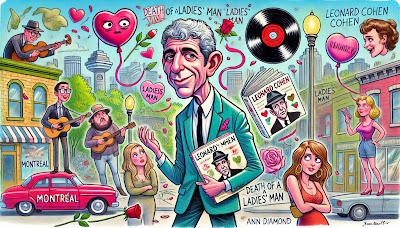
"I met Leonard Cohen through a mutual acquaintance in Montreal in November 1977, when I was 26 and he was 43. He was still married, but legally separated, from his wife Suzanne with whom he had two children. Leonard Cohen was known as a ladies’ man around our neighbourhood of Montreal, but he had just brought out a new record, Death of a Ladies’ Man (with Phil Spector) and a book of poems (Death of a Lady’s Man) which seemed to send a message he was turning over a new leaf."
Diamond reflects on the control Cohen exerted over people in his life and how he manipulated their perceptions:
"I realized he had a higher-than-average capacity to deceive people, even those he called ‘friends.’ Perhaps he liked pandering to people’s fantasies, or maybe he liked creating chaos. Or maybe this was his way of controlling people by divide-and-rule."
She also spoke about the professional and personal damage Cohen caused to both her and Kelley Lynch:
"When we ‘mutinied’ he used his personal power, oratorical skills and media contacts to damage us professionally and personally. Because Lynch’s side of the story had been ignored in the media, I ended up writing an account (‘Whatever Happened to Kelley Lynch’) which I posted on my blog in August 2008. Two weeks later I received a letter from Robert Kory demanding I take down the blog or be sued for libel."
Diamond also points to Cohen's troubling behavior concerning his daughter Lorca:
"In summer 1995, Freda Guttman, who had been Leonard’s first girlfriend when they were both teenagers, stopped me in the street and asked point-blank if I thought Leonard had ‘harmed’ his daughter from the age of four, as Lorca had told her friends. Based on things I had witnessed over 8 years, I thought it was possible."
Ann Diamond's declaration reveals the extent to which Cohen's manipulative tactics affected people both personally and professionally. She observed his capacity to use others as pawns and destroy those who dared to challenge his authority:
"Those who mutiny, like Kelley Lynch and me, receive the opposite treatment... I have learned the hard way that Leonard Cohen is a very gifted and skilled fabricator who does not back down even when confronted with evidence of his lying. His manipulative skills are exceptional and almost suggest early training in psychological warfare, including strategies such as putting people in 'double-bind' situations so they will discredit themselves."
Kelley Lynch's Struggle After Uncovering Fraud
Kelley Lynch's relationship with Leonard Cohen began to unravel when her new accountant discovered discrepancies and fraud in every Cohen-related corporate entity. Lynch, who had been deeply aware of Cohen's business and financial dealings, was alarmed by the fraudulent activities that were uncovered by her legal and tax professionals, which included tax liabilities, improper distributions, Cohen's own loans taken from corporate accounts without repayment, as well as substantial misappropriations from these accounts.
When Lynch began asking questions and attempting to address the fraudulent activities, she quickly found herself on the receiving end of Cohen's wrath. Cohen, along with his lawyers and publicists, went to extraordinary lengths to demonize and destroy her reputation. The media portrayed Lynch as an embezzler who had stolen millions from Cohen's retirement fund, ignoring her side of the story, as well as evidence, entirely. Cohen leveraged his extensive network of media contacts and lawyers, including Robert Kory, to file lawsuits and initiate a smear campaign against her.
The extent of Cohen's efforts to discredit Lynch was staggering. She faced a highly publicized lawsuit in which she was accused of stealing from Cohen—an accusation that led to her losing her home, custody of her son, and her career in the entertainment industry. Lynch was also subjected to multiple incidents involving the celebrity friendly police, including an unwarranted SWAT raid on her home, which left her further marginalized. Cohen's actions and the coordinated attacks by his legal team, which included threats, defamation, and financial ruin, painted a picture of a man willing to use all available means to silence and destroy someone who had become inconvenient.
Despite Cohen's attempts to portray Lynch as mentally unstable and dishonest, her account reveals an intelligent and capable businesswoman—someone Cohen once publicly described as a “blessing” to him and his family—who faced relentless and cruel persecution. Cohen employed highly vile and misogynistic tactics, falsely claiming that Lynch was his ex-lover, despite never discussing her in that context in interviews where he openly spoke of other relationships. He also took offensive measures to preemptively confront allegations of his inappropriate behavior towards her over the years. Lynch's story is one of resilience and courage, offering a stark contrast to the carefully curated public persona of Cohen as a wise and benevolent figure.
Cohen and his lawyer, Robert Kory, went to shocking lengths to discredit Kelley Lynch, including attempting to stir up tensions with the father of her younger son. In an extraordinary move, they visited the father's office and blatantly lied, claiming that Lynch had an affair with Oliver Stone. Nothing could be further from the truth. Stone himself has publicly confirmed that he and Kelley Lynch were never "lovers," directly contradicting Cohen's claims.
Lynch has consistently and vehemently challenged these misogynistic lies, pointing out Cohen's pattern of using smear tactics against women who stood up to him. These deliberate actions by Cohen and Kory were not only aimed at damaging Lynch's personal relationships but were part of a broader strategy to undermine her credibility and shift the focus away from Cohen's own misconduct.
Such behavior illustrates the lengths to which powerful figures will go to protect themselves, using deceit to manipulate the narrative at the expense of others.
A Carefully Curated Public Image
Leonard Cohen's public image was one of introspective wisdom, of a man who had experienced great depths of love, loss, and existential contemplation. He was the "poet of the spirits"—a persona he cultivated through his songs, interviews, and public appearances. Cohen spoke of his time in Cuba during the revolution, claiming to have been detained by Castro's forces. He also spoke of his intentions to join the Israeli forces as a paratrooper during the Yom Kippur War and recounted his intimate moments with Janis Joplin at the Chelsea Hotel, never mentioning how he treated other women in his life.
Cohen’s willingness to exploit his interactions with other artists, particularly women, is further highlighted in his references to Janis Joplin. Despite his romanticized version of their supposed relationship, Joplin herself had a starkly different take on the experience. In a candid interview, she described her encounters with Cohen as deeply disappointing, saying, "It was really heavy, like a slam-in-the-face; it happened twice. Jim Morrison and Leonard Cohen. And it’s strange ’cause they were the only two that I can think of, like prominent people, that I tried to... without really liking them up front, just because I knew who they were and wanted to know them. And then they both gave me nothing." Joplin’s words underscore Cohen's tendency to rewrite events in ways that glorified his experiences while disregarding the real impact on others, particularly women who were left feeling exploited and empty after his attention had faded.
These tales, highly embellished and often portrayed as "good rock 'n roll" stories, were part of his carefully managed narrative. He frequently told individuals like Ann Diamond about his participation in the CIA's MK Ultra, and dazzled Kelley Lynch with anecdotes about being a CIA recon operative during the Bay of Pigs, or simply "hanging out with junkies and hookers." In one letter to his publisher Jack McClelland, Cohen even wrote that his adventures in Cuba could provide good publicity for his next book project.
Cohen's ability to present himself as a revolutionary figure—a poet willing to die by firing squad like GarcÃa Lorca—only further solidified his enigmatic appeal. He spoke of being in psychologically disturbed states, like attempting to start a riot at a concert in Israel while on LSD, adding a layer of complexity to his public persona. His audience bought into this image, as well as into his relatable struggles with mental health.
Leonard Cohen was well known for his compelling storytelling, and he often recounted wild tales from his days in the music industry—some of which took on an almost mythical status over the years. Among these was the infamous gun incident allegedly involving Phil Spector, a legendary producer known for his eccentric and sometimes dangerous behavior. Cohen offered countless contradictory versions of the story, each one more embellished than the last, which only added to its allure. In one account, Spector pointed a gun at Cohen while telling him he loved him, a bizarre moment that Cohen recounted with a mix of humor and detachment. Other times, Cohen portrayed himself as the unflinching protagonist in a chaotic scene, surrounded by armed bodyguards and the erratic Spector. The varying narratives only deepened the sense of mystery around the incident, making it difficult to discern fact from fiction. These stories became part of Cohen's rock and roll legend—a reflection of the unpredictable, surreal nature of the music industry during its most tumultuous era. This is also a common way celebrities advance their careers and how media outlets drive narratives using sensational soundbites that sell.
The Dark Side of the Legend
The question of separating the art from the artist becomes even more pressing when we consider Leonard Cohen’s attempts to manipulate those closest to him. His public narrative and the stories he told not only served to enhance his image but also to deflect from the more troubling aspects of his behavior. Behind the poetic lyrics and soulful melodies was a man who left a wake of personal destruction—betraying friends, exploiting associates, and damaging lives.
It wasn't just Kelley Lynch who suffered. Ann Diamond, who once considered Cohen a mentor, endured years of professional setbacks due to Cohen's influence. Steven Machat, too, was financially impacted and saw his father defamed, possibly as a means for Cohen to divert attention from ongoing issues related to offshore accounts and financial misconduct. As Diamond noted:
"His persuasive gifts and charm are well-known and can be hard to resist... Once he has decided you are too 'mutinous' and a potential future threat, he becomes ruthless and will go to great lengths to see you neutralized and destroyed."
A Complicated Legacy
Leonard Cohen's body of work will likely continue to resonate with audiences for generations to come. His songs are profound, often deeply moving, and speak to the human condition in a way few others can. But we must also look at the destruction Cohen caused to people's lives and careers—including Kelley Lynch, Ann Diamond, and even Steven Machat—financially and through defamation.
Cohen worked closely with a bevy of journalists, authors, and biographers who essentially served as awe-inspired groupies who sanitized and shaped his image while assisting Cohen in crafting a narrative that would destroy Kelley Lynch's reputation and career. Many of these individuals, following Cohen's death, continued their libelous conduct towards Lynch—as well as Ann Diamond, Steven Machat, and, strangely enough, even his daughter Lorca (who was referred to disgracefully as a “disgruntled woman”). These figures, who helped sanitize and reinforce Cohen's public image, have now benefitted from their association with him by selling books and launching other projects for profit.
The myth of Leonard Cohen as a humble, spiritual figure has been significantly tarnished by the accounts of those who knew him behind the scenes. These testimonies reveal a man capable of manipulation, dishonesty, and calculated cruelty—traits that stand in stark contrast to his public persona. It leaves us with the uncomfortable truth that the man behind the art was far more complex—and far less benevolent—than the legend we were given. The reality of Cohen's nature is a reminder that the image crafted for public consumption often conceals a much darker truth beneath the surface. His story exemplifies how misconduct by Hollywood figures often goes unchecked, aided by armies of lawyers, accountants, advisers, and publicity firms who enable such behavior. In Kelley Lynch's case, Cohen was even shielded by local government actors, including the Los Angeles City Attorney, the Los Angeles District Attorney, and the LAPD's Threat Management Unit dedicated to celebrities.
Copyright Information: © 2024 Kelley Lynch. All Rights Reserved. Unauthorized reproduction, distribution, or use is strictly prohibited. All artwork on this site is the exclusive intellectual property of the creator and is protected under international copyright laws. Unauthorized reproduction, distribution, modification, or use of artwork on this site in any form is strictly prohibited without prior written consent. All rights reserved.
Unmasking Leonard Cohen: Control, Manipulation, and a Darker Legacy
Transcript Kelley Lynch and Steven Machat Conversation:
https://www.scribd.com/document/57415308/Kelley-Lynch-s-Conversation-With-Steven-Machat-Leonard-Cohen-and-Phil-Spector
Steven Machat’s recounting of his interactions with Leonard Cohen, along with Cohen's lawyer Robert Kory, offers a revealing glimpse into the tense and manipulative dynamics that surrounded Cohen's professional and personal dealings. Despite his public persona of humility and spiritual wisdom, Cohen's behind-the-scenes actions tell a different story—one marked by deception, control, and a fierce effort to protect his legacy at all costs. Let’s delve into some of the key issues Steven Machat’s experiences highlight.
Control and Manipulation: One striking instance of Cohen's manipulation is when he introduced Robert Kory as a mere "groundskeeper" to Steven Machat during a visit in 2007. Kory, it turned out, was hiding in a bedroom during this meeting, and only later emerged, lying about his role. Kory was, in fact, Cohen’s lawyer, present not just by coincidence but to spy on the conversation—highlighting Cohen’s deep fear of Steven's probing questions. This orchestrated deception paints a picture of a man determined to control every narrative around him and to ensure his interests remained protected, even if it required deceit and manipulation.
Questionable Dealings and Possessiveness: The incident involving the film Bird On A Wire further underscores Cohen's possessiveness and manipulation. When Steven requested the return of the film, Cohen refused, stating he kept it to prevent Avril Giacobbi from accessing it. This kind of possessiveness—holding onto materials that rightfully belonged to others—is part of a broader pattern of selfish behavior that starkly contrasts Cohen's image as a wise and humble artist. Cohen's reluctance to return rights or materials to Steven and his father Marty Machat demonstrates his willingness to exploit and maintain control over assets that were not entirely his.
Attempts to Suppress Truth: Steven recounts an exchange where Robert Kory told him, "We can stop this book," referring to Steven's book Gods, Gangsters, and Honour. This statement points to an active effort by Cohen and Kory to control or suppress narratives they perceived as damaging. The fact that Kory was willing to negotiate the suppression of the book indicates the lengths to which Cohen and his team were willing to go to protect his public image and ensure their version of the story remained unchallenged.
Misogyny and Power Dynamics: The issue of misogyny also arises in Steven’s accounts. He notes that Cohen and Kory "fuck over women" and refers to them as misogynists. This aligns with reports from others who knew Cohen—including Ann Diamond and Kelley Lynch—who have described his manipulative and sometimes abusive relationships with women. In Kelley Lynch’s case, Cohen used legal and financial tools to suppress her, damaging her reputation and placing her in a vulnerable position. The power dynamics here reveal a side of Cohen that sharply contrasts with the enlightened, spiritual persona he presented to the world.
Paranoia and Conspiracy Theories: Cohen's paranoia is another significant aspect highlighted by Steven's account. Cohen suspected that Steven might be in a conspiracy with Kelley Lynch, indicating a deep-seated fear of losing control over his carefully curated image and financial interests. This paranoia drove Cohen to take aggressive actions toward Lynch, using the legal system to portray her as an antagonist and prevent her from speaking out. Cohen’s behavior here is not indicative of someone at peace but rather someone in constant fear of exposure.
Financial Misconduct and Lack of Transparency: Steven and Kelley Lynch discussed several instances of Cohen's financial misconduct, involving everything from bearer bonds to royalties from Death of a Ladies Man. Cohen allegedly sold Phil Spector’s masters to Sony without permission and kept royalties meant for Spector. These actions were not only unethical but also shrouded in secrecy, with allegations of offshore accounts and misappropriated funds that contradict Cohen’s public portrayal as a struggling artist uninterested in wealth.
Paranoia and Conspiracy Theories: The narrative presented by Cohen often sought to depict others as threats, and his use of manipulative tactics, legal pressure, and attempts to silence critics speaks to a person desperately trying to maintain power over his narrative and public image. Lynch, being portrayed as the antagonist, suffered the consequences of Cohen's fears, having her reputation and livelihood targeted. This behavior reveals a side of Cohen that starkly contrasts with the spiritual and peaceful image he cultivated in the public eye.
A Complicated Legacy - Kelley and Steven: In summary, the exchanges between Kelley Lynch and Steven Machat reveal Leonard Cohen as someone deeply concerned with maintaining control—over his image, his finances, and the people in his life. The machinations involving Robert Kory, the deceptive handling of film rights, and the allegations of misogyny and suppression of dissent all indicate a darker, more calculating side to Cohen. This complicates the narrative of Cohen as the insightful, soulful artist beloved by his fans. Instead, it exposes a man who could be ruthless in protecting his interests and legacy, regardless of the impact on those around him.
<
Copyright Information: © 2024 Kelley Lynch. All Rights Reserved. Unauthorized reproduction, distribution, or use is strictly prohibited. All artwork on this site is the exclusive intellectual property of the creator and is protected under international copyright laws. Unauthorized reproduction, distribution, modification, or use of artwork on this site in any form is strictly prohibited without prior written consent. All rights reserved.
<
Copyright Information: © 2024 Kelley Lynch. All Rights Reserved. Unauthorized reproduction, distribution, or use is strictly prohibited. All artwork on this site is the exclusive intellectual property of the creator and is protected under international copyright laws. Unauthorized reproduction, distribution, modification, or use of artwork on this site in any form is strictly prohibited without prior written consent. All rights reserved.
Saturday, October 19, 2024
Leonard Cohen and the Struggle for Truth: A Closer Look
The saga of Leonard Cohen and Kelley Lynch is complex, marked by a deeply personal relationship that unraveled into legal disputes and public allegations. Adding to this story is Ann Diamond, an author and former acquaintance of Cohen, who offered her unique perspective on the turmoil between Cohen and Lynch. Through her observations, Diamond not only sheds light on the intricate dynamics at play but also paints a picture of Cohen that contrasts sharply with his public persona.
Ann Diamond's Perspective: Ann Diamond, who knew Cohen during a pivotal period of his life, has summarized what she witnessed and heard from Lynch. She presents an image of Cohen as a man driven by contradictory impulses: an iconic poet and spiritual seeker on one hand, and a controlling figure seeking to maintain power over those in his inner circle on the other. Diamond's insight into Cohen's behavior provides a window into his private world that many of his admirers might find surprising.
In her letter to her publisher, Simon, Diamond reflects on the stories that were told about her—many of which she later discovered Cohen had propagated.
According to Kelley Lynch, Cohen portrayed Diamond as obsessed with him, spinning a narrative that she followed him from Greece to California, attempting to be a part of his life under false pretenses. These stories, which Cohen shared not only with Diamond's acquaintances but also the media, played into a broader campaign to control and marginalize those who challenged his authority.
Diamond describes the atmosphere surrounding Cohen as "cult-like," with loyal followers who treated him as the leader of a secret society. These followers, Diamond notes, acted as spies, bodyguards, and informers, helping Cohen maintain an environment of secrecy and loyalty. She also details Cohen's alleged practice of turning against his friends, spreading gossip about them, and wielding control in subtle yet damaging ways.
Ann Diamond’s Observations on Cohen: Diamond's observations, which Lynch confirmed through her two-decade-long experience with Cohen, depict a man whose darker side contrasted with his public image: A micro-manager employing a network of spies and informers who worked for money, favors, or the sheer joy of belonging.
A gossip who often turned against his friends, constantly slandering them in private. A narcissist obsessed with polishing his image as an enlightened artist and gifted poet.
Deep envy for those more successful in the music industry, such as Bob Dylan or Phil Spector.
A recovering alcoholic addicted to prescription methamphetamines - "not for happiness."
A megalomaniac who believed he "wrote the Bible."
These observations were not merely Diamond's musings—they echoed Kelley Lynch's own experiences and what she witnessed firsthand. As Lynch recounts, Cohen’s efforts to control and silence her were driven by a desire to maintain power and keep her from sharing damaging truths about his financial dealings and personal behavior.
Cohen’s Ruthless Quest for Control: Throughout her legal and personal struggle, Lynch described Cohen as embodying both light and darkness—a poet who sang of redemption but could act ruthlessly to suppress dissent. Ann Diamond's insights further suggest that Cohen's quest for control extended beyond his creative work and into the lives of those around him. His ability to craft beautiful lyrics about love and spiritual awakening stood in stark contrast to the actions he took to maintain power and control over others, actions that were hidden behind the carefully polished facade of the humble artist.
For Lynch, Cohen’s fall from grace was not a myth but a lived experience, as the man who once inspired through his poetry became a figure of betrayal and deceit. The legacy of light and darkness is woven into the fabric of Cohen’s life, leaving a mark on those who came too close to the flame.
The Hidden Struggles Behind the Music: Leonard Cohen, the man who wrote Beautiful Losers while reportedly high on meth and LSD on Hydra, continued to imbibe both drugs and alcohol over the years. This indulgence caused the more negative and manipulative sides of Cohen to take prominence over his tortured and, at times, unhinged soul. His beautiful music and profound lyrics could not disguise the darker impulses that guided his actions, leading to a complex legacy where the artist's hidden struggles left a lasting impact on those around him.
Cohen was able to hide his darkness from even his closest friends, yet he once told Lynch that she was his 'soulmate,' suggesting an intimate bond that belied the turmoil and manipulation beneath the surface. This statement illustrates the complexity of their relationship—one marked by deep connection, but also his profound betrayal.
Copyright Information: © 2024 Kelley Lynch. All Rights Reserved. Unauthorized reproduction, distribution, or use is strictly prohibited. All artwork on this site is the exclusive intellectual property of the creator and is protected under international copyright laws. Unauthorized reproduction, distribution, modification, or use of artwork on this site in any form is strictly prohibited without prior written consent. All rights reserved.
Subscribe to:
Posts (Atom)